



The incidence of skin cancer continues to rise both globally and in Spain, despite the fact that a large proportion of these tumours could be prevented through simple measures to protect against solar radiation. Specialists emphasise that cumulative exposure to the sun over a lifetime remains the main risk factor, making prevention and early detection essential tools for reducing its impact.
According to the International Agency for Research on Cancer (IARC), a body under the World Health Organisation, skin cancers are among the most common cancers in the world. In Spain, the Spanish Society of Medical Oncology (SEOM) forecasts more than 9,400 new cases of melanoma per year, continuing the upward trend observed over recent decades.
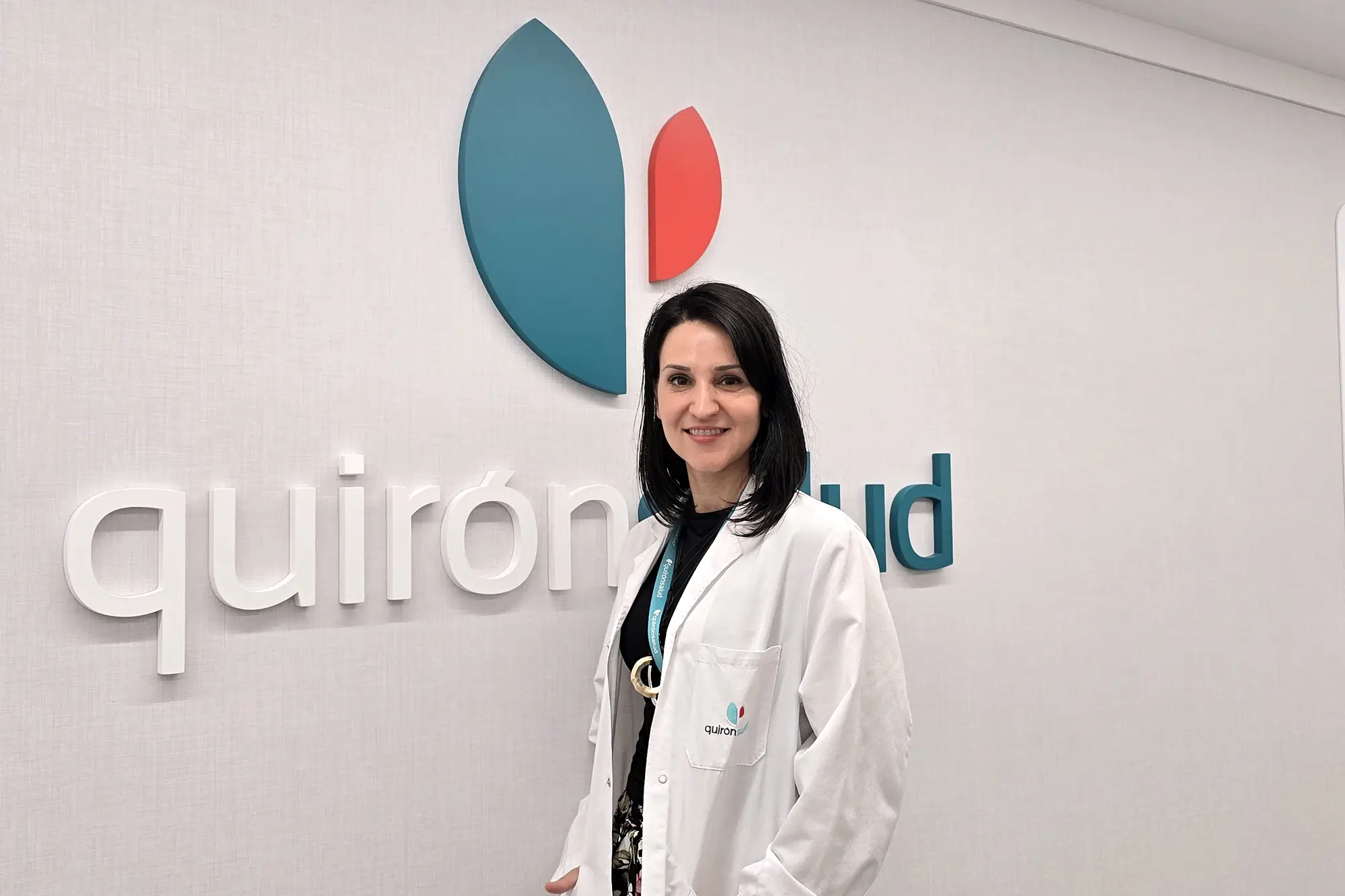
Against this backdrop, Dr Alicia Cabrera has recently joined the Dermatology Department at Quirónsalud Marbella Hospital. Following her first few days of clinical practice, the specialist notes that this reality is clearly reflected in dermatology consultations. “Spain is a country with many hours of sunshine and a strong culture of outdoor living. The problem is that the damage the sun causes to the skin is cumulative; the skin has a memory. What we see today in our consultations is the result of the radiation the skin was exposed to ten, twenty or thirty years ago.”
The dermatologist explains that the most common skin tumours are basal cell and squamous cell carcinomas, which are closely linked to chronic sun exposure accumulated over the years. “They are directly linked to chronic sun exposure – that is, the sun we are exposed to day after day throughout our lives, whether through work, sport or everyday outdoor activities,” she points out.
On the other hand, melanoma, considered the most aggressive form of skin cancer, is usually associated with intense and intermittent sun exposure, particularly that which causes sunburn during childhood and adolescence. “Melanoma is closely linked to intense and intermittent sun exposure, and especially to sunburn suffered during childhood and adolescence,” she adds.
Risk factors and more cases in young patients
Although non-melanoma skin tumours remain more common in people over the age of 60, the specialist warns that more and more cases are being detected in young patients.
Factors that increase the risk of developing skin cancer include having fair skin and light-coloured eyes, a family history of the disease, a large number of moles, or carrying out work or sporting activities outdoors without adequate protection.
Dr Cabrera also emphasises the importance of recognising the warning signs that may indicate the presence of a malignant lesion. “The golden rule is to keep an eye out for any changes,” she says. When it comes to moles, she highlights the usefulness of the ABCDE rule for identifying suspicious lesions: “A mole that becomes Asymmetrical, with Irregular Borders, that changes Colour or has several shades, whose Diameter exceeds 6 millimetres, or that undergoes Rapid Evolution”.
She also recommends paying attention to any new lesion that is gradually growing, or to wounds and scabs that do not heal properly. “You should be suspicious of any new spot or lesion that is growing, as well as any wound or scab that never seems to heal properly,” she explains.
Early diagnosis improves the prognosis
The specialist emphasises that early detection is crucial for improving the chances of a cure and simplifying treatment.
“When we detect these lesions early, in their initial stages, the prognosis is excellent. Furthermore, given that the main and most effective treatment is surgery, the earlier the detection, the simpler the procedure required to remove it will be.”
Conversely, when the diagnosis is made at an advanced stage, treatment may require a more complex approach involving various therapeutic strategies, including medication, radiotherapy and other specialised techniques.
For this reason, the dermatologist encourages the public to carry out regular self-examinations and to consult a specialist if they notice any suspicious changes. “Early diagnosis makes the difference between dealing with a minor, easily resolved issue and a much more serious health problem.”
Sun protection should be part of your daily routine
Dr Cabrera points out that, as ultraviolet radiation is the main known cause of these tumours, prevention is within everyone’s reach through simple habits incorporated into daily life.
“We simply need to adopt habits such as using sun cream and wearing caps or hats,” she says.
One of the most common mistakes is associating the use of sun protection solely with the beach or the swimming pool. “The sun is just as strong on a terrace, in the city or in the mountains,” she warns. She also emphasises the importance of applying a sufficient amount of product, reapplying it when necessary and avoiding the use of tubes opened in previous seasons.
The specialist emphasises that sun protection should be maintained all year round. “The sun in spring, autumn and even winter continues to affect the areas we always leave exposed, such as the face, neck or hands. Incorporating sun protection into your daily morning routine, all year round, is the best long-term health investment for your skin.”
As a practical recommendation, she suggests three simple steps: apply sun cream every morning as part of your usual routine, reapply protection using convenient formats such as sticks or sprays, and always complement sun protection with physical measures such as hats, caps, approved sunglasses, sun-protective clothing or parasols.
Quirónsalud, a pioneer in the treatment of cancer patients in Andalusia
The Quirónsalud hospital group is a leader in the comprehensive care of cancer patients. Its eight centres, located in strategic towns across the region, have established a specific care programme to ensure a comprehensive and personalised response for patients with cancer, regardless of their age.
It currently operates two oncology centres equipped with state-of-the-art technology for the diagnosis and treatment of cancer. One of these, the Comprehensive Oncology Department, is located at the Quirónsalud Málaga Day Hospital and also serves the Quirónsalud Marbella and Quirónsalud Campo de Gibraltar hospitals.
The other leading oncology centre for Western Andalusia operates along similar lines, comprising the Radiotherapy Department at Quirónsalud Infanta Luisa, as well as the Nuclear Medicine Departments at this Seville-based hospital and at Quirónsalud Córdoba, enabling a more precise diagnosis of oncological conditions. This network also provides coverage for Quirónsalud Huelva and Quirónsalud Sagrado Corazón. In addition, there are the Medical Oncology services and the Oncology Day Hospitals located across the group’s eight healthcare centres in Andalusia.
Quirónsalud in Andalusia
The Quirónsalud Group in Andalusia currently operates eight hospitals located in the cities of Málaga, Marbella, Los Barrios (Cádiz), three in Seville (Sagrado Corazón, Infanta Luisa and Materno-Infantil), Córdoba and Huelva, as well as two surgical day hospitals in Seville and Málaga and 22 specialist and diagnostic medical centres; this positions it as the leading private hospital provider in this autonomous community.
About Quirónsalud
Quirónsalud is the leading healthcare group in Spain and, together with its parent company Fresenius-Helios, also in Europe. In addition to its operations in Spain, Quirónsalud also has a presence in Latin America. Together, the group employs over 50,000 professionals across more than 180 healthcare centres, including 57 hospitals with over 8,000 beds. It utilises state-of-the-art technology and boasts a large team of highly specialised professionals of international renown. Its centres include the Fundación Jiménez Díaz University Hospital, Teknon Medical Centre, Ruber Internacional, Quirónsalud Madrid University Hospital, Quirónsalud Barcelona Hospital, Dexeus University Hospital, Policlínica Gipuzkoa, General University Hospital of Catalonia, Quirónsalud Sagrado Corazón Hospital, etc.
The Group is committed to promoting teaching (eleven of its hospitals are university hospitals) and medical and scientific research (it operates the FJD Institute for Health Research, accredited by the Ministry of Science and Innovation).
Furthermore, its healthcare service is organised into cross-disciplinary units and networks, which enable it to make the most of the experience accumulated across its various centres and to translate its research into clinical practice. Quirónsalud is currently carrying out a wide range of research projects throughout Spain, and many of its centres are at the forefront of this field, pioneering work in various specialities such as oncology, cardiology, endocrinology, gynaecology and neurology, amongst others.