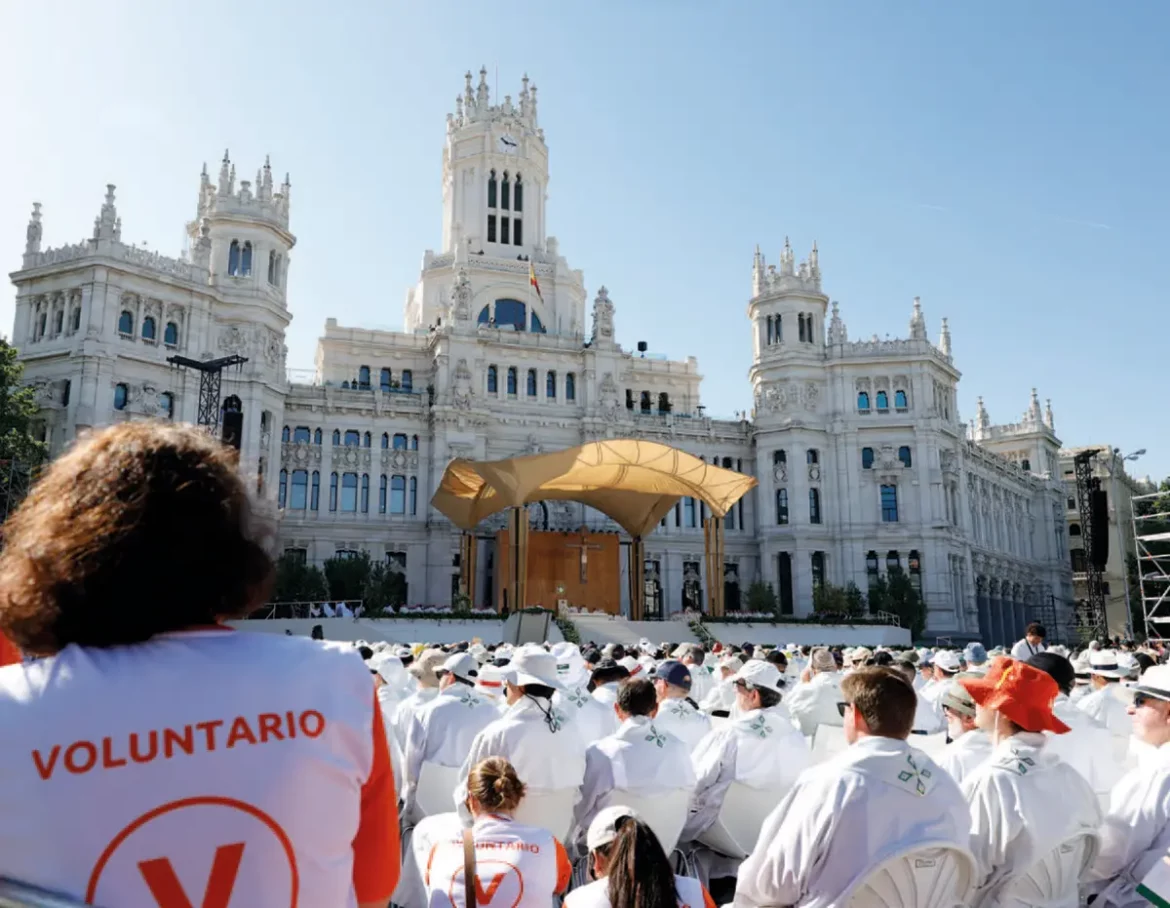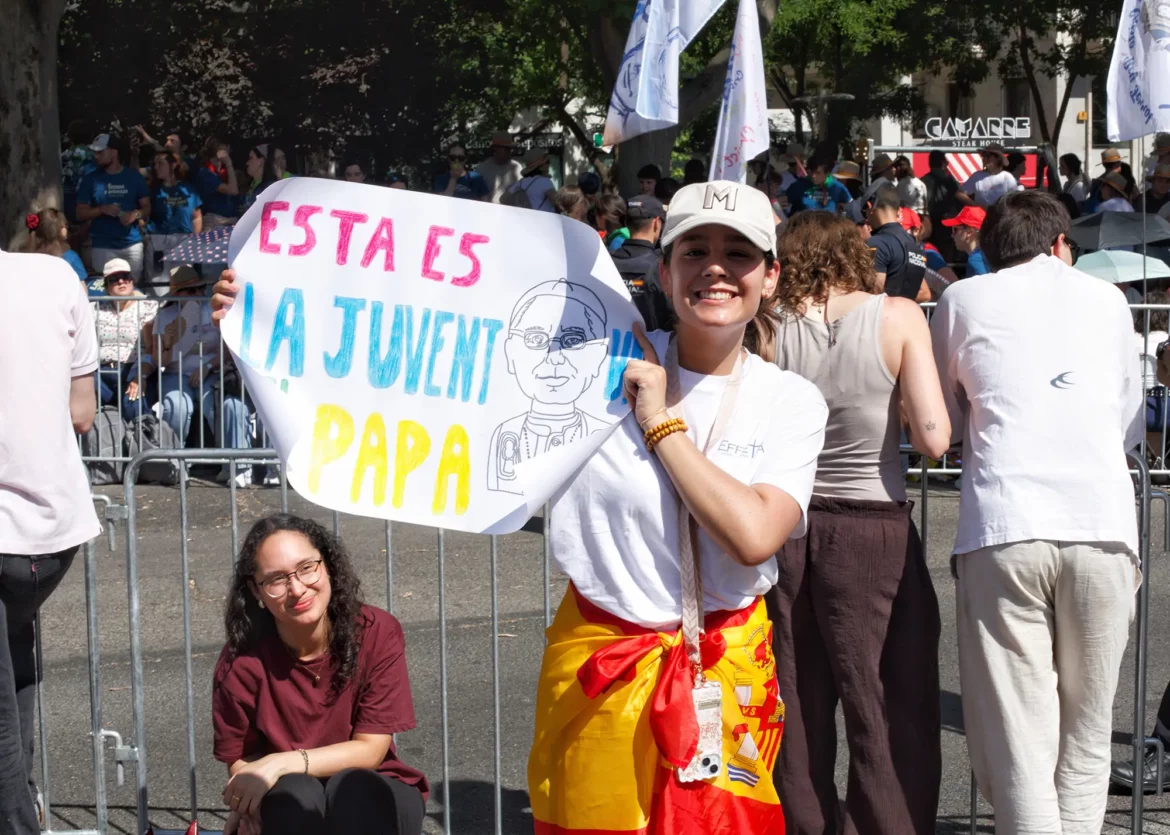



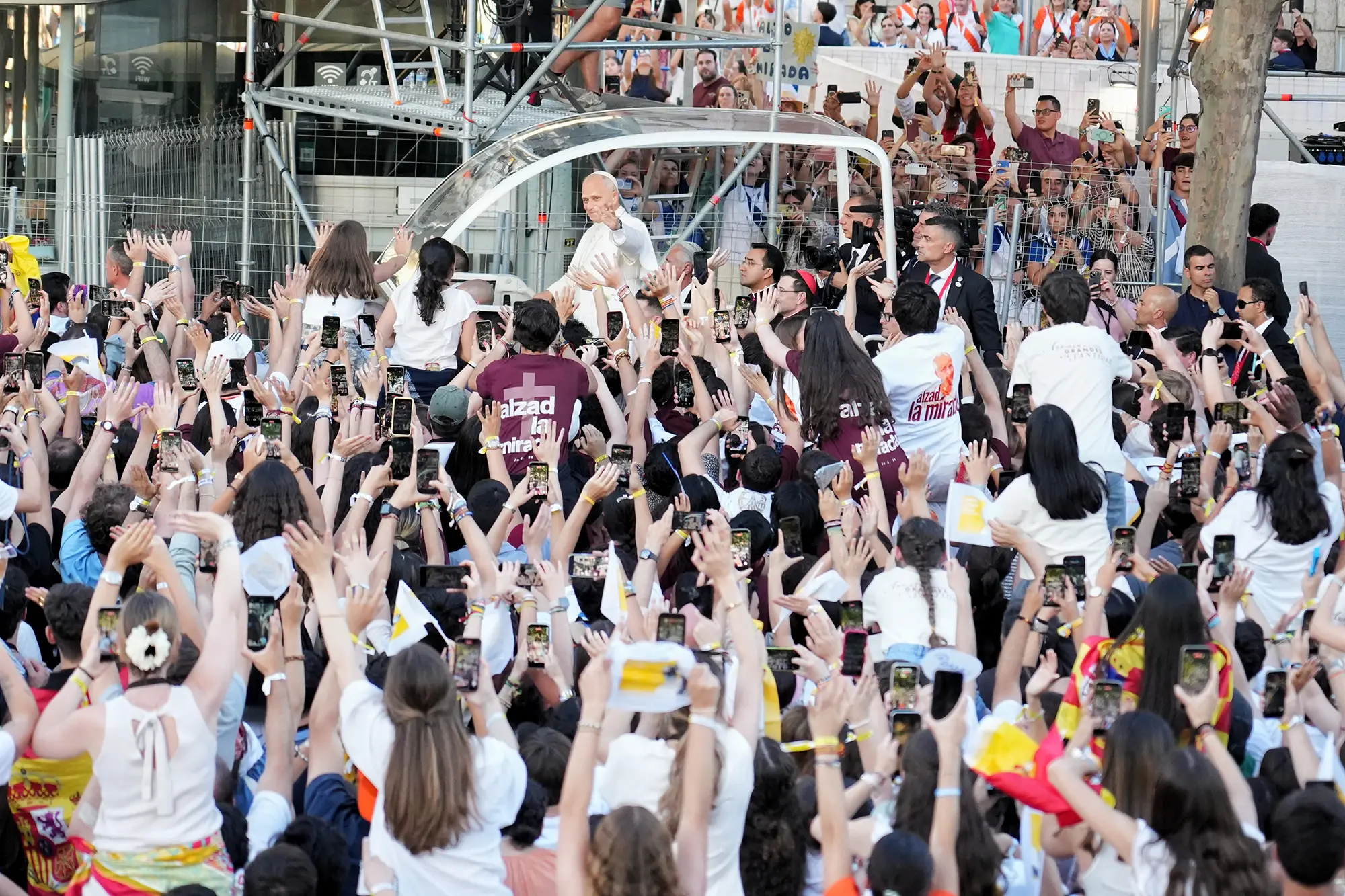
The Pontiff chooses it as the first European destination to visit. Three days that moved Leo XIV, with a multimillion-euro organisation executed to perfection.
“The great Catholic heart of Spain, beating with immense force in its capital, Madrid.” This is how Pope Leo XIV described his emotional and deeply moving three-day visit to Madrid, before travelling on to Barcelona and the Canary Islands, in what was his first apostolic journey to a European country during the first year of his pontificate.
Three days, from 6 to 9 June 2026, under a blazing sun, during which the capital of Spain became a focus of global attention and, at the same time, allowed the greater Madrid to write its own history: a story of affection and love bearing the signature of the head of the Catholic Church — that is to say, the Universal Church. Madrid, a historic crossroads over countless decades, now holds among its shelves and archives the fact that a Pope of Augustinian and North American origin, with Hispanic heritage on his mother’s side, has written a beautiful page of transcendent values, albeit under the discipline of a highly demanding programme, scheduled down to the minute.
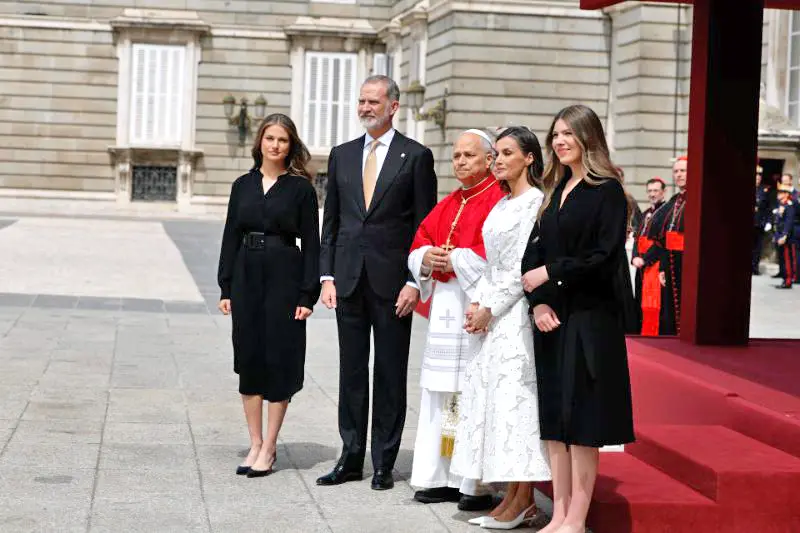
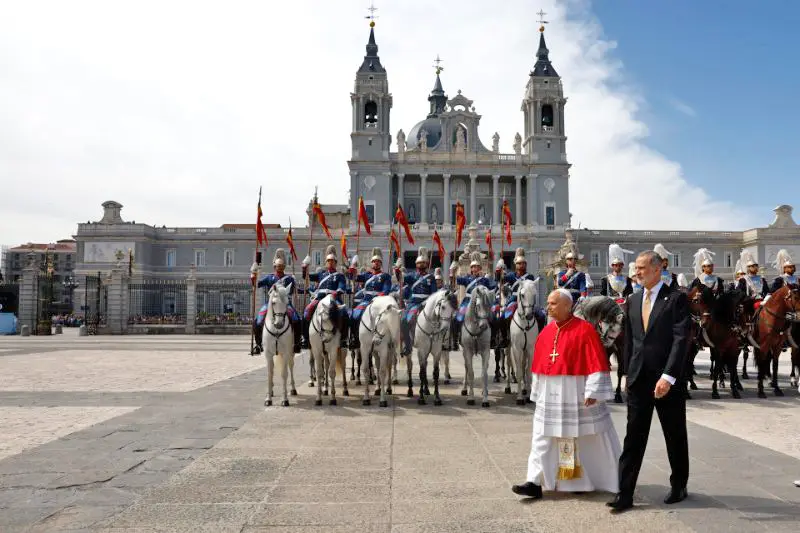
This is a chronicle faithful to the facts, which, in order to be objective, must also be seasoned with something intangible: affection, human warmth, love, to say it all. The Roman Pontiff landed, somewhat nervous, in Madrid at midday on the 6th, received by Their Majesties the King and Queen in his capacity as Head of State; it should not be forgotten that, since Spain has been Spain, Spanish monarchs have been “Their Catholic Majesties”.
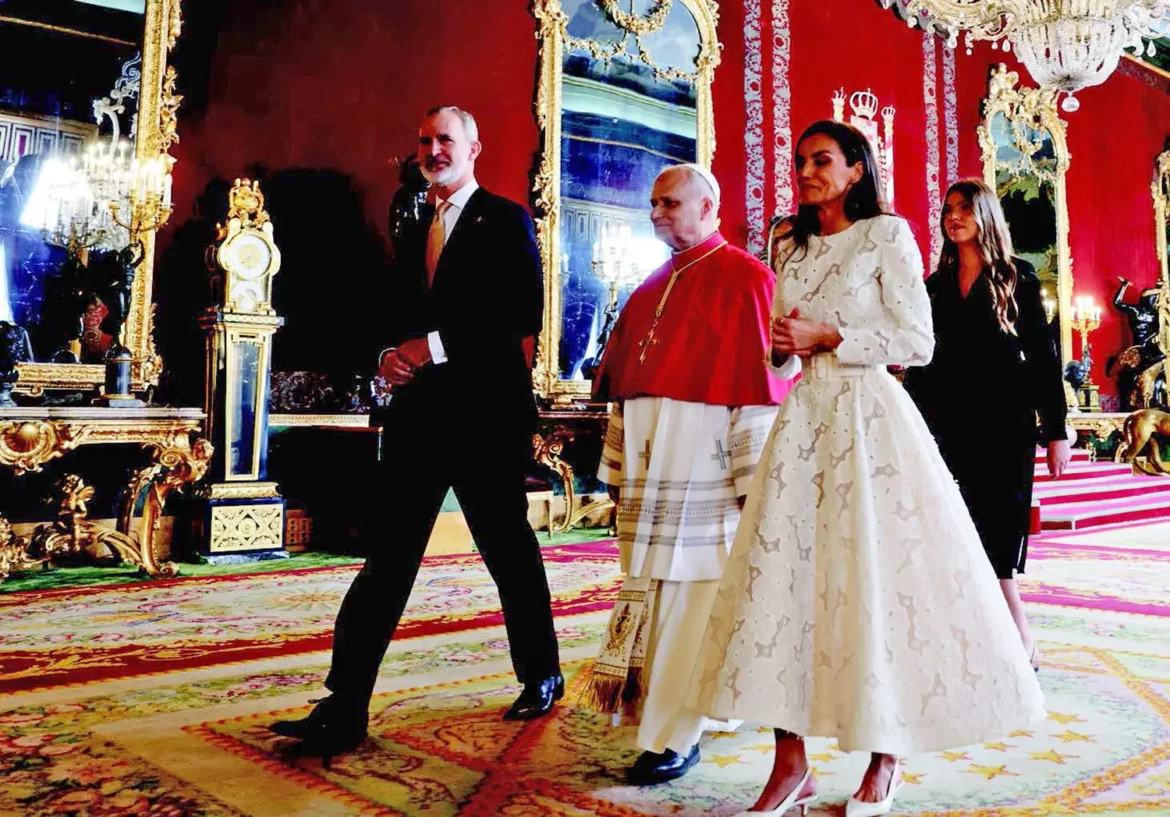
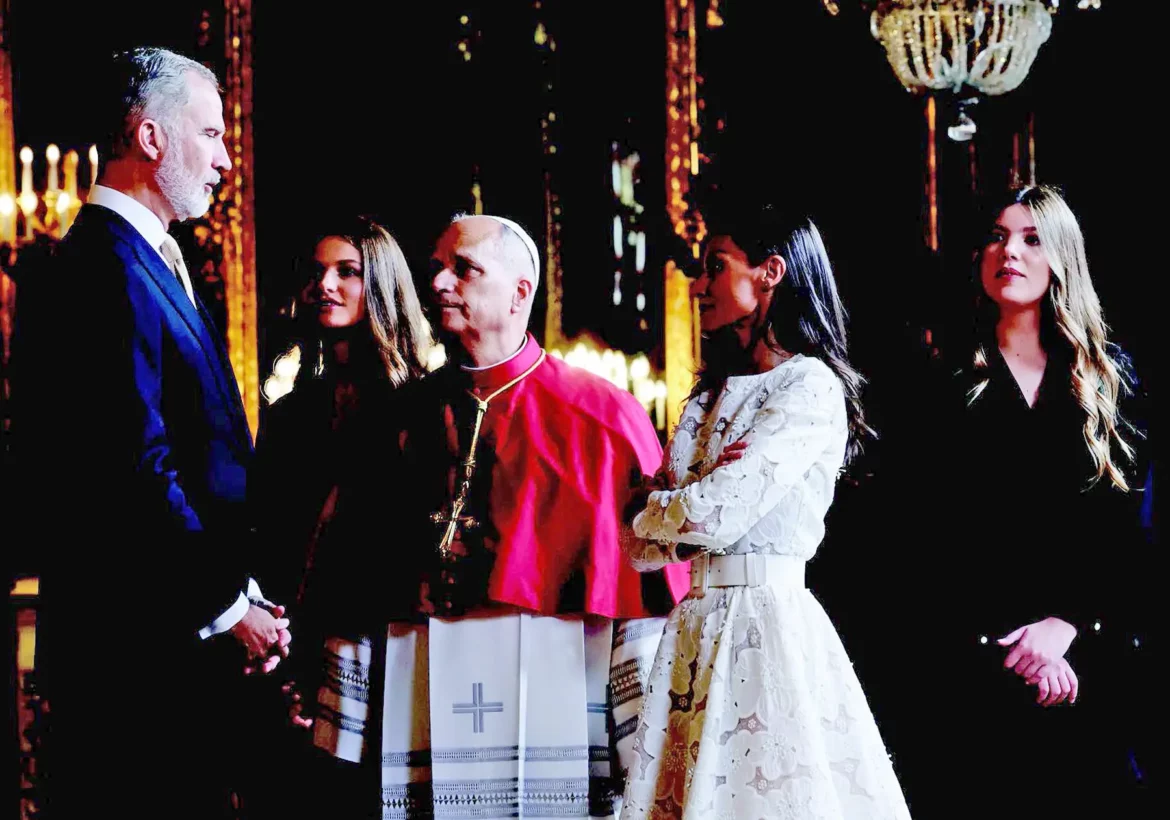
Prevost’s advantage over his predecessors, Wojtyła and Ratzinger, who had previously visited the capital, is that he knows the history of the country and the soul of Spain to perfection; indeed, he admires that history and loves that soul. With the people of Madrid always present, fervent and devoted in the streets, the Pope made it clear from the very outset, in the Throne Room, that he had arrived in “noble” Spain as a “missionary” and as the Pope of “humanity” and of “life”. Charity stood at the heart of the apostolic journey.
The papal visit was an occasion conceived by God for Madrid to appear before the world as it truly is: open, cosmopolitan, welcoming and generous. From the moment Prevost set foot in the airport, he was never left unsupported by the people, to such an extent that the political class hastened to secure its photograph with the man in white.
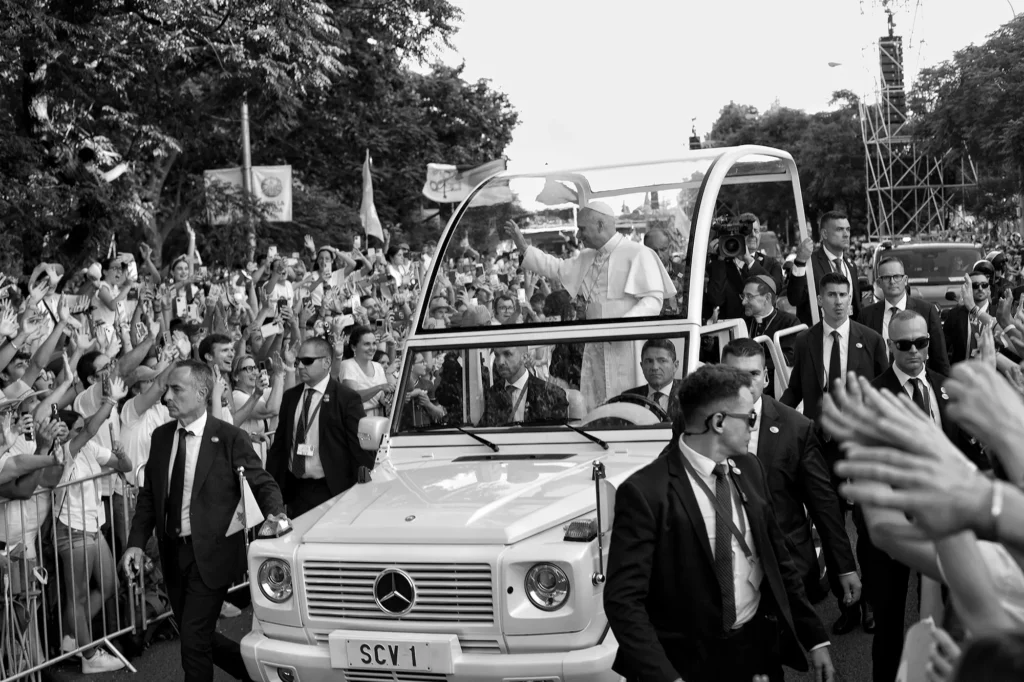
AN ALTAR OF YOUTH ON LA CASTELLANA AND AT CIBELES
The simplicity radiated by the former Augustinian missionary in the most deprived areas of Peru, and the honesty he conveys, are perhaps his most powerful means of attracting young people, the principal protagonists of the six days of the papal visit to old Spain. This did not prevent the Pontiff from saying, at every moment, what a Vicar of Christ must say — here, there and everywhere.
Deeply moving was the Vigil with young people who had arrived from all parts of the world, numbering more than 500,000. Presided over by an enormous wooden cross, which will remain forever in Plaza de Lima, and by the words of the Holy Father, the gathering received messages of sacrifice, effort and love for Christ — words that did not merely seek to flatter the ears of the new generations. A special, transcendent and renewing atmosphere could be felt, with a Pope visibly moved and on the verge of tears. The music of the journey, “Alza la mirada”, provided a distinctive note through the voices of Hakuna, Siloé and Besmaya — sounds that pierced the senses.
A few hours later, in the emblematic Cibeles — unmistakably Madrid — the Vicar of Christ gathered one and a half million people to celebrate the feast of Corpus Christi. It was a new outpouring of contagious religious emotion. Thirty thousand red carnations adorned the Pope’s procession with the consecrated Monstrance beneath the canopy. The messages are always the same: love, humanity, charity… Christ. Despite the centuries that have passed, few occasions have seen central Madrid experience a Mass of such transcendence.
Five hours later, the Movistar Arena was the venue chosen for “Weaving Networks”, the papal meeting with intellectuals, scientists, writers, journalists and artists. Twelve thousand guests, irrespective of religious or political affiliation, listened to the head of the Universal Church as he made a firm defence of life, of humanity above any other consideration, and of ethics in every sphere of human existence. It was the setting that consecrated the actor Antonio Banderas with his famous confession to Robert Prevost that he had experienced “the spell of God”. Sara Baras also earned a small portion of the Pontiff’s time through her art and dedication. By the end of that second papal day in Madrid, the capital had already become the city of the Holy Father.
FROM CONGRESS TO THE BERNABÉU
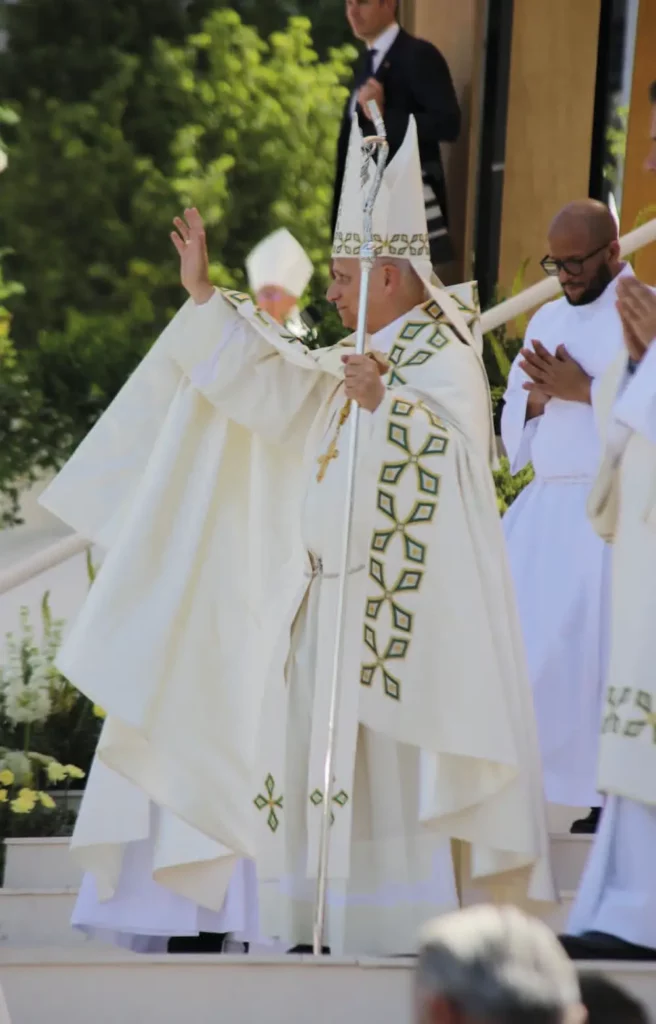
For the first time in the history of Spanish parliamentarianism, a Pope of Rome addressed deputies and senators in a joint session. An almost unanimous assembly received Leo XIV standing, with a prolonged ovation. Far from pandering to politicians and their pro-abortion, unbelieving or corrupt policies, the Pope delivered a courteous yet clear admonition, in his own accent and at his own pace. The enthusiasm of the parliamentary communist far left did not go unnoticed by analysts.
The legacy of Saint John Paul II — the Pope who filled the Santiago Bernabéu Stadium in 1982 — with so many echoes in the current Pope’s North American “glamour”, guided him with determination and meekness to the white coliseum, where more than one hundred thousand young people injected him with a formidable surge of enthusiasm. Prevost moved from one emotion to the next. His ancestral serenity wrestled with the pounding of a heart that was visible on his face. On the plane, he had told journalists that the Pope belonged to all teams, but Prevost was a Madridista. The President of Real Madrid honoured him in a particularly distinguished manner upon his arrival at the great coliseum. There he spoke to the young people of the Gospel, and the young people responded to him as young people do: with joy and exaltation. The rest was carried by the singers Bustamante, Diges and Diana Navarro, together with 1,000 amateur singers and 70 musicians.
On his final day in Madrid, the Pope devoted himself to paying homage to the city’s patroness, La Almudena, and to the most disadvantaged — an obsession he inherited directly from the man who had been his great friend, Pope Francis.
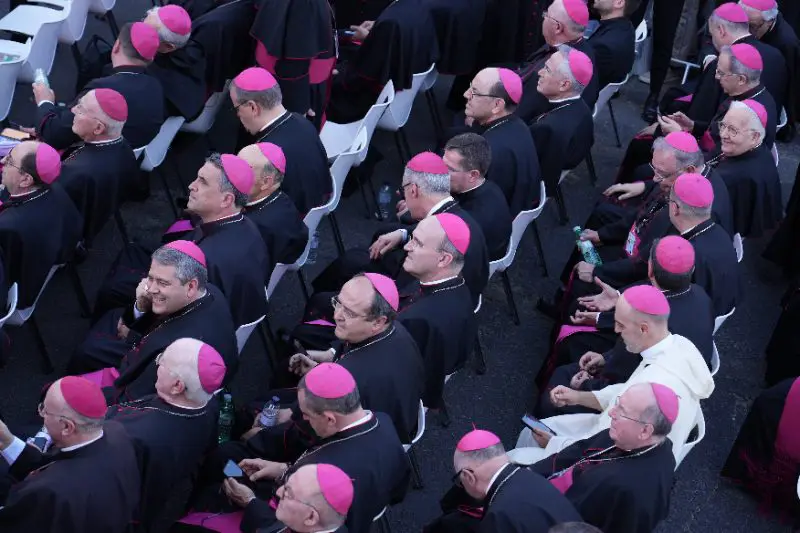
IMAGE AND MONEY
The first visit of the North American Pope was followed by more than one billion people around the world, especially in the United States and Europe. The media and image impact of those three days, with thousands of journalists from across the globe and live television coverage, reached Guinness-record proportions, thanks precisely to the shy gaze of the humble Pope. With an organisation that was perfect, meticulous, almost Spartan, Madrid delivered a lesson to the world, consolidating its position as one of the great global cities specialised in hosting major events of every kind and condition.
Public investment — from the State, the autonomous communities, Madrid and Barcelona — for this apostolic visit by the head of the Catholic Church amounted to €70 million in all areas, excluding aircraft rental. In Madrid alone, the return on all fronts reached €125 million. Yet above that figure, a trifle when compared with the ordinary expenditure of Spain’s various administrations, stood the image of modernity and efficiency transmitted to the entire world. One last-minute piece of information should be added: for the first time in the history of the Church of Rome, the number of baptised faithful has reached 1.5 billion. It should also be underlined that, from a strictly religious point of view — which is by no means the principal purpose of this report — the revival of Catholic sentiment and practice in Madrid, where 15 new churches are currently being built, has reached proportions not seen in more than half a century.
When the Iberia Airbus A320, christened “Peñón de Ifach”, climbed into the skies to carry Leo XIV to Barcelona in 40 minutes, it had already been engraved upon the hearts of millions of believers that Madrid had just become the “city of the Pope”.
Everything suggests that the Augustinian Pontiff, so impressed by the welcome he received, wishes to return soon. The Holy Father wants the capital of Spain to become the Catholic epicentre of a disbelieving Europe.